YOUTH DEVELOPMENT
Why San Diego Girls Need Strength Training More Than Anyone Is Telling Them
Bryan Schuler | Movement Futures Foundation
If you have a daughter playing youth sports in San Diego, here is something the sports community is not telling you clearly enough:
She is 4 to 6 times more likely to tear her ACL than a boy playing the same sport.
Not somewhat more likely. Not a little more vulnerable. Four to six times more likely. In soccer and basketball — two of the most popular youth sports for girls in this city — that number holds consistently across the research. And ACL injuries in female athletes aged 15 to 19 represent the highest concentration of this injury in any demographic.
The research on why is clear. The intervention that prevents it is well-established. And almost no one is delivering it to young female athletes in a systematic, coached, progressive way.
That intervention is strength training. Specifically: structured, coached, progressive strength development that builds the neuromuscular control, hip stability, and foundational strength that protects female athletes from the injury patterns they are disproportionately vulnerable to.
But the case for girls and strength training goes far beyond injury prevention. It goes to confidence, self-esteem, bone density, athletic performance, and a young woman’s relationship with her own physical capability for the rest of her life.
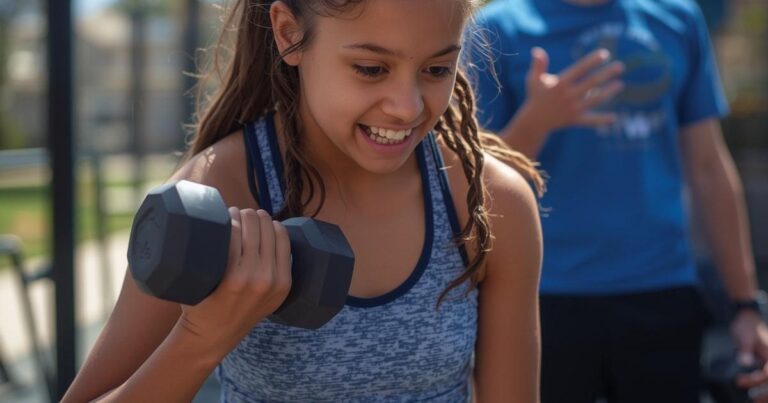
The Injury Crisis Nobody Is Talking About
ACL injuries among youth athletes have nearly doubled over the past 20 years. The segment of the population driving that increase most significantly is adolescent female athletes.
Girls are 4 to 6 times more likely to sustain an ACL injury compared to boys participating in similar sports. That gap peaks during adolescence and is highest in soccer, basketball, and gymnastics — the sports that dominate San Diego’s youth athletics landscape for girls. In soccer specifically, female athletes face more than three times the ACL injury risk per athlete exposure compared to male players.
The research on why is not mysterious. At least 80 percent of adolescent sports participants cannot adequately control their trunk or knee joints when performing squats and jumps — key movements in virtually every sport. Among female athletes, inadequate neuromuscular control is documented as one of the most prevalent modifiable ACL injury risk factors. The word “modifiable” is important: this is not an anatomical fate. It is a training gap.
The fix is not stretching. It is not sport-specific skill work. It is building the foundational lower body strength, hip stability, and movement control that allows a young female athlete to land, cut, and decelerate without her knee collapsing inward under load. That is a strength training outcome. And it requires a structured, progressive, coached strength program to produce it.
Most young female athletes in San Diego are playing sport without that foundation. The injury statistics reflect it.
Girls are 4 to 6 times more likely to sustain an ACL injury compared to boys in similar sports, with ACL injury rates beginning to increase at ages 12 to 13 for girls. Female athletes aged 15 to 19 account for the highest concentration of ACL injuries. → Prevention of ACL Injuries in Adolescent Female Athletes — Contemporary Pediatrics
Why Youth Sports Alone Won’t Fix This
The natural assumption is that a girl who plays sports is getting the physical development she needs. I have been coaching youth athletes in San Diego for 25 years and I can tell you directly: that assumption is wrong.
Youth sports develop sport-specific skills. They do not systematically develop the foundational strength and neuromuscular control that protects athletes in those sports. A young female soccer player who trains year-round is developing her soccer game. She is not, by default, developing the bilateral hip strength, single-leg stability, and landing mechanics that would meaningfully reduce her ACL injury risk.
This is not a failure of effort or dedication. It is a structural gap in how youth sports programs are designed. Club teams are built to develop sport performance and win games. They are not built to systematically develop physical foundations — that is a different discipline, requiring a different methodology and a different kind of coaching.
The research is consistent: neuromuscular training programs — which include strength training, landing mechanics, and movement control work — can significantly reduce ACL injury risk in female athletes when delivered properly. A 2024 study of young elite female soccer players found that 12 weeks of structured strength training produced meaningful improvements in both physical fitness and injury prevention outcomes. The intervention works. The delivery is what’s missing.
For most girls playing youth sports in San Diego, nobody is delivering it.
A 2024 study found that 12 weeks of structured in-season strength training produced meaningful improvements in physical fitness and injury occurrence in young elite female soccer players aged 15.4 years on average. → Effects of In-Season Strength Training on Physical Fitness and Injury Prevention in North African Elite Young Female Soccer Players — Sports Medicine Open, 2024
The Bone Density Window Parents Don’t Know About
There is a window in a young woman’s life when her bones are building peak density. It is roughly ages 10 through 18. What she does during that window — specifically, how much mechanical load she puts on her bones through strength training and high-impact activity — largely determines her peak bone mass.
Peak bone mass is the single most important determinant of osteoporosis risk in later life. Women are significantly more vulnerable to osteoporosis than men, and the foundation for that vulnerability — or resilience against it — is built during adolescence.
Resistance training during adolescence is one of the most evidence-backed interventions for maximizing bone mineral density accrual in young women. Adolescence is a critical period for bone development, and physical exercise — particularly resistance training and high-impact loading — is a key factor in promoting bone health that will matter for decades.
Most parents do not think about their teenage daughter’s bone density. Most coaches don’t either. But the window when that foundation is being built is open right now — and it closes. A girl who misses this developmental window because no one provided her with structured strength training doesn’t get a second chance at it.
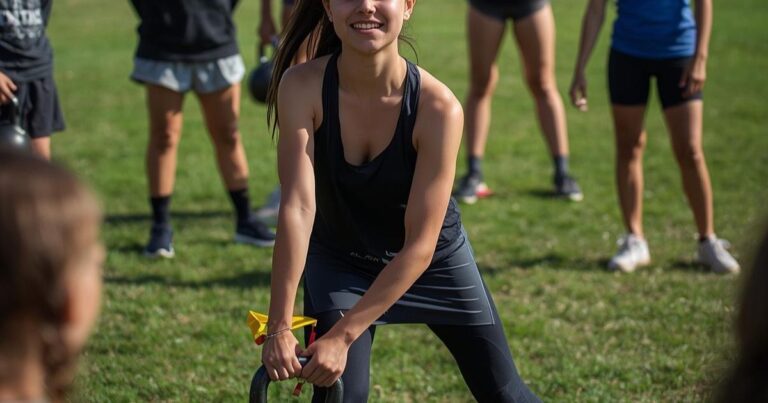
What Strength Training Does for a Girl’s Confidence
The physical case for girls and strength training is compelling enough on its own. But the psychological case is equally important — and even less discussed.
Self-esteem declines in girls during adolescence. This is well-documented and consistent across research. The social, hormonal, and developmental pressures of early adolescence converge in ways that erode young women’s confidence in their physical capability, their appearance, and their general self-worth.
Strength training is one of the most documented interventions that reverses that trend. A landmark study on untrained adolescent female volunteers found that 12 weeks of strength training produced a 40 percent increase in strength, along with improvements in weight training confidence, confrontation confidence, perceived physical ability, physical self-presentation confidence, and general effectiveness in life. The confidence gains generalized beyond the gym — they changed how young women approached challenges in every area of their lives.
More recent research confirms the pattern. Strength training programs focused on girls’ physical development — not on making them smaller, but on making them stronger — consistently produce improvements in body image, self-esteem, and physical self-concept.
I have watched this play out with young female athletes over 25 years of coaching. A girl who learns to squat properly, who adds weight to the bar each week, who discovers she can do things physically that she didn’t believe were possible — that experience changes her. Not just in the gym. In how she carries herself. In how she responds to difficulty. In who she is becoming.
That development is not available to her if nobody provides the coaching environment where it can happen.
A study of untrained adolescent female volunteers found that 12 weeks of strength training produced a 40% increase in strength along with improvements in weight training confidence, confrontation confidence, perceived physical ability, physical self-presentation confidence, and general effectiveness in life. → Self-Efficacy and Training for Strength in Adolescent Girls — Research Quarterly for Exercise and Sport
What Most Youth Programs Get Wrong About Girls
When strength training is offered to young female athletes at all — and it often isn’t — it tends to be delivered in one of two ways that underserve them.
The first is aesthetic framing. Programs that position strength training for girls as a way to “tone up” or “get lean” miss the point entirely. They tie physical development to appearance rather than capability, which reinforces exactly the body-image pressures that make adolescence so difficult for young women. The research on girls and strength training is clear that programs focused on what their bodies can do — not what they look like — are the ones that produce lasting confidence gains.
The second failure is treating girls like smaller adult women. Adolescent female athletes have specific developmental, psychological, and physiological characteristics that require programming designed for them — not scaled down from adult programming, not adapted on the fly from male athlete programs. The social self-consciousness of adolescence, the specific injury vulnerabilities of female athletic development, and the bone density window that closes in the late teens all require a coaching approach built specifically around young female athletes.
Getting this right requires a coach who understands adolescent female development, not just strength and conditioning in the abstract.
What MFF Delivers for San Diego Girls
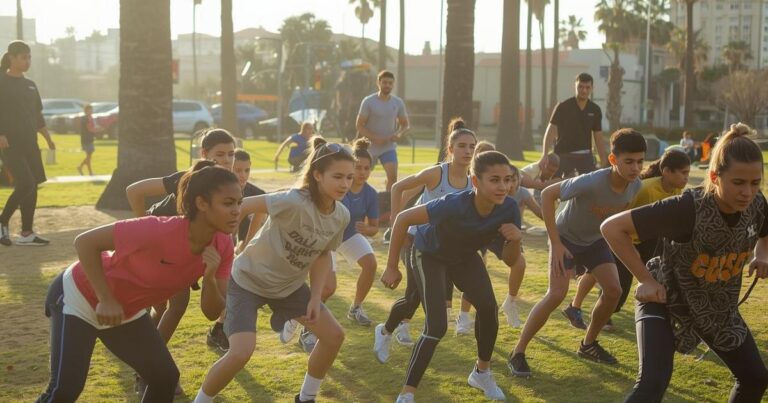
The MFF program is built for every young athlete in San Diego who needs foundational strength development — and that includes, critically, young female athletes whose sport participation and long-term health are being underserved by a coaching landscape that hasn’t caught up to what the research says they need.
What MFF delivers for young female athletes:
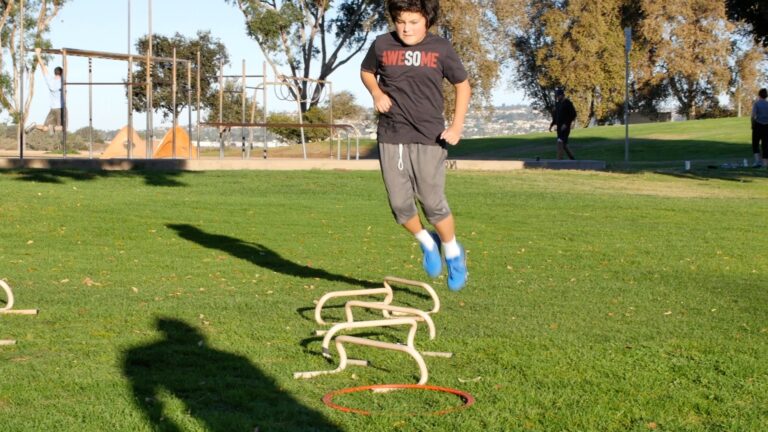
- Foundational movement literacy — the squat, hinge, push, pull, and brace patterns that produce the neuromuscular control that protects against the ACL injury risk female athletes disproportionately carry.
- Progressive resistance loading — systematic strength development that builds the bone density and muscular resilience that will matter for a young woman’s entire adult life.
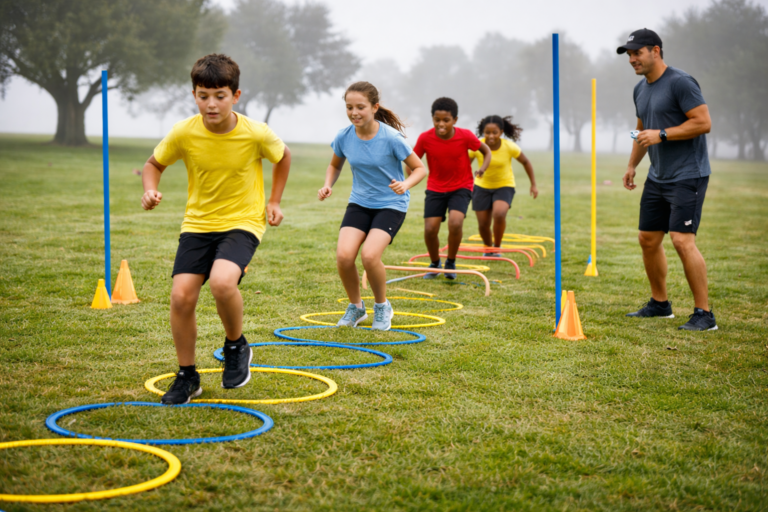
- A coaching environment built for adolescent development — not aesthetic-focused, not borrowed from male athlete programming, but designed around what young female athletes actually need physically and psychologically.
- Mentorship that builds confidence — the coach-athlete relationship that research consistently shows produces confidence gains that generalize far beyond physical training.
- Access regardless of income — through the MFF scholarship model, young female athletes who cannot afford private strength coaching can access the same quality of programming that higher-income families pay for.
San Diego girls are playing sport at historic rates. They are getting injured at rates that the medical community is actively alarmed by. The research on what prevents those injuries — and what builds the confidence and physical capability that transforms young women’s lives — is not a secret.
The coaching that delivers it just needs to be accessible to all of them.
Bryan Schuler is the founder of Movement Futures Foundation and Wired Fitness SD. He holds a master’s degree in exercise science and sports performance and has been training athletes in San Diego since 1999.
Movement Futures Foundation
Every San Diego Girl Deserves the Coaching That Protects Her and Builds Her
MFF provides structured strength training and mentorship for young female athletes in San Diego — regardless of their family's financial situation. Apply for the program or fund a scholarship for a girl who needs access to it.
Frequently Asked Questions
The research supports beginning structured strength training in early adolescence — generally around ages 10 to 12 — with bodyweight movement pattern development first. This timing aligns with the opening of the critical bone density development window and gives young female athletes the foundational neuromuscular control they need before the ACL injury risk period peaks at ages 12 to 15. The MFF program works with athletes ages 10 through 17, with programming designed around each athlete's developmental stage rather than a fixed age threshold.
No — and this concern, while understandable, reflects outdated assumptions about female physiology. Women and girls do not build muscle mass the way men do due to fundamental differences in testosterone levels. What strength training does for young female athletes is build lean muscle, improve body composition, increase bone density, and develop the physical capability that produces both athletic performance and lifelong health. The research consistently shows that strength training programs focused on what young women's bodies can do — not on aesthetics — produce improvements in body image and self-esteem, not anxiety about appearance.
Club sport participation develops sport-specific skills — it does not systematically develop the foundational strength and neuromuscular control that protects female athletes in those sports. The 4 to 6 times higher ACL injury rate in female athletes compared to males exists precisely because sport-specific training does not address the hip stability, landing mechanics, and bilateral strength deficits that drive that injury gap. A structured strength program is not a replacement for sport — it is the physical foundation that makes sport participation safer and more sustainable over a young woman's athletic career.
MFF's coaching methodology is built around the specific developmental, physiological, and psychological characteristics of adolescent athletes — including the specific vulnerabilities and developmental windows that are particularly important for young female athletes. This means the program addresses hip stability and landing mechanics that reduce ACL injury risk, bone-loading progressions timed to the adolescent bone density development window, and a coaching environment that builds physical confidence without aesthetic framing. Coaches are trained to understand these specificities and to deliver programming that serves young female athletes at the standard the research says they need.
Apply through the MFF website. The application process is straightforward — we want to understand your daughter's current activity level, what sports she plays or has interest in, and where her physical development stands. From there, MFF coaches will assess her movement patterns and design a program appropriate for her developmental stage. If cost is a barrier, scholarship consideration is available — financial need does not disqualify a young athlete from accessing the program. Reach out through the MFF contact page with any questions before applying.
girls strength training San Diego teen girls strength training adolescent female athletes strength girls ACL injury prevention youth girls fitness San Diego strength training benefits girls Movement Futures Foundation