
YOUTH DEVELOPMENT

Why Youth Strength Programs Are Disappearing in San Diego

Bryan Schuler | Movement Futures Foundation

Youth strength training in San Diego — and across the country — is facing a quiet crisis that most parents don’t see coming until it’s too late. Not a dramatic headline. Not a sudden event. Just a slow, steady erosion of the systems that were supposed to develop our kids physically, leaving a generation of young athletes who are less capable, more fragile, and completely underprepared for the demands of sport and life.

I’ve been training in San Diego since 1999. I founded Wired Fitness SD in 2001 and spent the past 25 years working with youth athletes, teens, adults, and competitive athletes across every format — outdoor group training, in-gym personal training, in-home coaching, and online programming. I have watched this problem compound in real time, season after season, year after year.

Kids are arriving to me without foundational strength. Without basic movement literacy. Without any history of being coached in how their body actually works. And when I ask parents where they expected that to come from — the answer is almost always the same: school, or sports.

That answer is the problem.

The Numbers Don’t Lie — American Kids Are Getting Weaker and Less Active

Before we talk about what’s missing, let’s establish what the data actually says, because this isn’t opinion. This is documented, longitudinal, federally tracked decline.

The Physical Activity Alliance released its 2024 United States Report Card on Physical Activity for Children and Youth and handed American kids an overall grade of D-. That’s the same grade they received in 2022. No improvement. No progress. Just a sustained, systemic failure that the country keeps choosing to ignore.

The specifics are worse. Only 20 to 28 percent of children aged 6 to 17 are meeting the recommended 60 minutes of daily physical activity. That means roughly three out of four kids in this country are not moving enough on any given day — not by a wide margin, not by a technicality. Just not moving.

The percentage of students who engaged in muscle-strengthening activities at least three days per week dropped from 52 percent in 2013 to 51 percent in 2023 — with the real low point bottoming out at 45 percent in 2021. That is the metric that matters most for this conversation. Cardiovascular activity gets all the headlines. Strength development gets none. And the numbers reflect it.

As of 2021, more than 40 percent of school-age children and adolescents had at least one chronic health condition, and a 2022 JAMA Pediatrics report found that nearly one in three adolescents met the criteria for prediabetes.

These are not the statistics of a generation that’s being served by the systems designed to develop them. These are the statistics of a generation being failed.

✅ The research is unambiguous: American youth are less physically capable, less active, and more metabolically compromised than any generation in recent memory.

✅ The gap between what kids need developmentally and what they are actually receiving is not narrowing. It is widening.

The Physical Activity Alliance’s 2024 U.S. Report Card found that American children and youth maintained the same D- grade in physical activity as in 2022, with fewer than 28% of youth aged 6–17 meeting daily activity guidelines. → 2024 United States Report Card on Physical Activity for Children and Youth — Physical Activity Alliance, 2024

School PE Has Failed an Entire Generation

Let me be direct about something that most people in this industry dance around: physical education in American public schools is not a fitness program. It is not a development program. It is not a strength program. For the vast majority of students, it is a liability-managed activity period with a rotating cast of games, a floor full of teenagers who haven’t been coached in anything, and a budget that would embarrass most youth sports fundraisers.

I don’t say this to insult PE teachers, many of whom are genuinely trying to do right by their students with the resources they’re given. I say this because the resources they’re given are a national disgrace.

The median school physical education budget is $764 per year. Per year. For the entire program. That’s not per student — that’s the total annual budget for a program responsible for the physical development of hundreds of kids. With 60 percent of schools charging fees for sports and families spending an average of $693 per child annually, the system has created a two-tiered structure where quality physical activity becomes a privilege rather than a right.

The curriculum problem is just as serious as the funding problem. By the time students reach ages 16 to 18, they receive an average of just 34 minutes of PE per week. Only six states in the entire country require physical education for students across every grade level. The requirement percentage drops from 97 percent in 6th grade to just 43 percent by 12th grade — which means that by the time a young athlete enters their most physically formative years, there’s a better than even chance that structured physical education has been removed from their school day entirely.

Since the No Child Left Behind Act passed in 2002, 62 percent of elementary schools and 20 percent of middle schools significantly increased instructional time for reading and math, with 44 percent of school districts cutting time in areas including physical education. Academic pressure became the justification for physical devaluation, and PE has never recovered.

And even when PE exists — even when a student attends class consistently — what they receive is not progressive strength development. There is no periodization. No progressive overload. No coached technique. No movement literacy outcomes. No mentorship component. Students rotate through activities, rarely train the same movement pattern twice in any systematic way, and graduate with zero functional strength training experience and no idea how to develop themselves physically.

That is not a fitness program. That is organized time-filling with gym shoes on.

🔹 No progressively loaded resistance training

🔹 No coached movement pattern development

🔹 No individual assessment or programming

🔹 No continuity from one week to the next

🔹 No mentorship or accountability structure

PE class, at its current national average, is not preparing your child for anything.

CDC’s 2013–2023 Youth Risk Behavior Survey documented that muscle-strengthening participation among youth dropped from 52% to 51% over the decade, hitting a low of 45% in 2021 before a minor rebound. → Youth Risk Behavior Survey Data Summary & Trends Report: 2013–2023 — CDC / Contemporary Pediatrics, 2025
Youth Sports Aren’t Solving It Either

The natural response from most parents is: “But my kid plays sports. They’re active.” And that response makes complete sense — because youth sports participation looks like physical development from the outside. It has structure, coaches, scheduled practice, competition. It should be building the foundational strength and athleticism that school PE isn’t.

It isn’t.

Youth sports, as they exist today, are skill-specific and increasingly exclusionary. They assume athleticism before developing it. They reward kids who already move well, cut kids who don’t, and build programs around winning and skill refinement rather than foundational physical development. Approximately half of adolescent athletes participate on club teams in addition to their school-based teams year-round in a chosen sport — which sounds impressive until you examine what that year-round commitment actually produces.

Early sport specialization, defined as engaging in more than 8 months of a single sport before the age of 14, has been associated with increased risk of injury, burnout, and sport dropout in both boys and girls. The medical community — including the American Academy of Pediatrics, the NSCA, and the American Orthopaedic Society for Sports Medicine — has issued position statements warning against early specialization. The research is clear. The practice continues anyway, driven by parental pressure, recruiting timelines, and the myth that earlier is always better.

Despite popular belief, early sports specialization has not been validly linked to professional athletic success. Late adolescent specialization and broader training in childhood are actually linked to greater elite achievement in most sports.

The kid who specializes in soccer at age nine and trains year-round isn’t building a foundation. They’re grinding a single movement pattern on top of a body that has never been taught to squat properly, hip hinge safely, brace their core under load, or develop the bilateral strength that protects their joints in a sport that demands unilateral explosiveness constantly. The result is what sports medicine clinics see every week: overuse injuries, early burnout, and athletes who arrive at high school physically limited before they’ve had a chance to develop.

Youth sports, as currently structured, are not a substitute for structured strength development. They are a complement to it — one that only works when the foundational work has already been done.

✅ Youth sports develop sport-specific skills, not physical foundations

✅ Early specialization increases injury risk without improving elite outcomes

✅ Kids who never receive foundational strength coaching are playing sport on an unstable base

A 2022 systematic review found that early sport specialization is not validly linked to professional athletic success, and that broader training in childhood is associated with greater elite achievement in most sports. → Youth Sports Specialization and Its Effect on Performance, Career Longevity, and Injury Rates — McLellan, Allahabadi & Pandya, 2022, Orthopaedic Journal of Sports Medicine

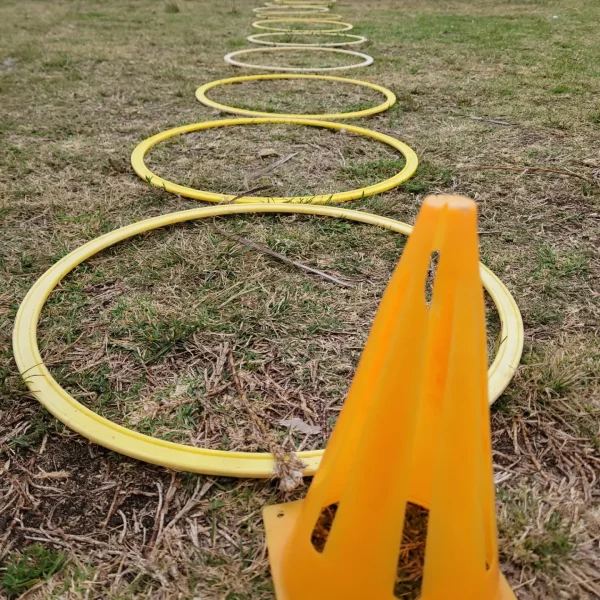
structured youth fitness program outdoor training equipment San Diego

What a Real Structured Youth Strength Program Actually Does

Here’s what I’ve spent 25 years building toward — and what is almost entirely absent from the youth fitness landscape in San Diego and nationwide.

A genuine structured youth strength program is not a bootcamp. It is not a CrossFit class scaled down for kids. It is not recreational movement with some weights nearby. It is a systematically designed, progressively loaded, coach-driven development process built around the specific physiological and psychological needs of adolescent athletes.

What that looks like in practice:

🔹 Progressive resistance training — movements that build on each other week over week, month over month. Not random. Not recreational. Systematically overloaded to create adaptation.

🔹 Coached movement literacy — teaching the squat pattern, the hinge pattern, the push and pull, the brace. The fundamental movements that protect joints, build functional strength, and create a physical vocabulary that serves a kid for the rest of their athletic career.

🔹 Individual assessment — understanding where each athlete is starting, where their weaknesses are, and programming to address them specifically rather than applying a generic group format and hoping for the best.

🔹 Injury prevention built into the program — not as an afterthought, but as a structural component. Kids who move well don’t get hurt the way kids who don’t move well do. Every session should be building resilience, not creating risk.

🔹 A mentorship framework — this is the piece that most programs don’t talk about, and it may be the most important one. Adolescent athletes respond to consistency, accountability, and the presence of a coach who actually sees them. Not a teacher managing 35 kids in a gym. A coach who knows their name, their patterns, their progress, and their potential.

The research on youth resistance training is unambiguous. Done correctly, it improves bone density, body composition, insulin sensitivity, sport performance, and injury resilience. It has zero negative effect on growth plates when properly coached — that myth has been debunked repeatedly in peer-reviewed literature. What limits kids’ development isn’t strength training. It’s the absence of it.
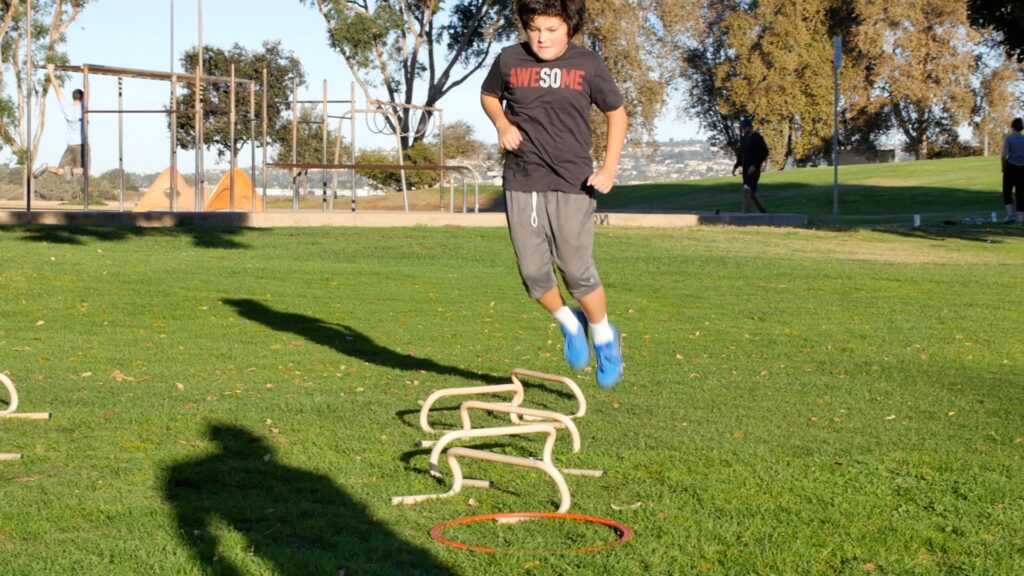
youth strength training San Diego coach working with teen athlete

San Diego’s Gap — And Why Movement Futures Foundation Exists

I’ve lived and worked in San Diego since 1999. I know this city’s fitness landscape better than almost anyone. And when I look at what’s available for youth athletes who need structured, progressive strength development — not youth sports, not school PE, but real coaching — the gap is significant.

Most of what exists falls into one of three categories: competitive club sports that assume athletic ability before developing it, gym environments designed for adults that admit teenagers as an afterthought, or recreational programs with no progressive structure and no individual coaching. None of these are what I’m describing. None of these are what the research says kids need.

Movement Futures Foundation exists because that gap is unacceptable.

MFF is a San Diego nonprofit I founded with a singular focus: structured youth strength development delivered with the same methodology, the same standards, and the same mentorship framework that I’ve applied to athletes and adults for 25 years. This isn’t a program built by committee or designed by a board of directors who’ve never coached a kid through their first squat. This is the system I’ve developed, refined, and proven — delivered by coaches I train personally to carry that methodology forward.

The mission isn’t complicated: give San Diego youth access to structured, coached, progressive strength training regardless of their family’s financial situation. The scholarship model exists because physical development shouldn’t be a privilege. It shouldn’t require parents to pay club sport fees, private training rates, or specialty gym memberships. It should be accessible to every kid in this city who needs it.

The Standard Has to Change

American kids are receiving a D- in physical activity. School PE budgets average $764 per year. Youth sports are producing overuse injuries and early burnout at rates the medical community is actively warning against. And the gap between what exists and what is actually needed — real, structured, progressively coached strength development — is nearly total.

This is the problem Movement Futures Foundation was built to solve.

The work starts here, in San Diego, with a program built on 25 years of proven methodology and a commitment to the idea that every kid in this city deserves access to a coach who sees their potential and has the system to develop it.

If you believe that too — fund a youth scholarship, share this with a parent who needs to hear it, or reach out to learn how MFF is building what San Diego’s youth athletes have been missing.

The standard has to change. We’re changing it.

Bryan Schuler is the founder of Movement Futures Foundation and Wired Fitness SD. He holds a master’s degree in exercise science and sports performance and has been training athletes in San Diego since 1999.

Movement Futures Foundation

Every Kid in San Diego Deserves a Coach Who Sees Their Potential

MFF is building the structured youth strength program San Diego has been missing — led by a methodology proven over 25 years, delivered by coaches trained to carry it forward. Help us put it in front of every kid who needs it, regardless of their family's financial situation.

Frequently Asked Questions

youth strength training San Diego structured youth fitness programs adolescent strength training youth fitness nonprofit San Diego youth physical fitness youth strength development Movement Futures Foundation